
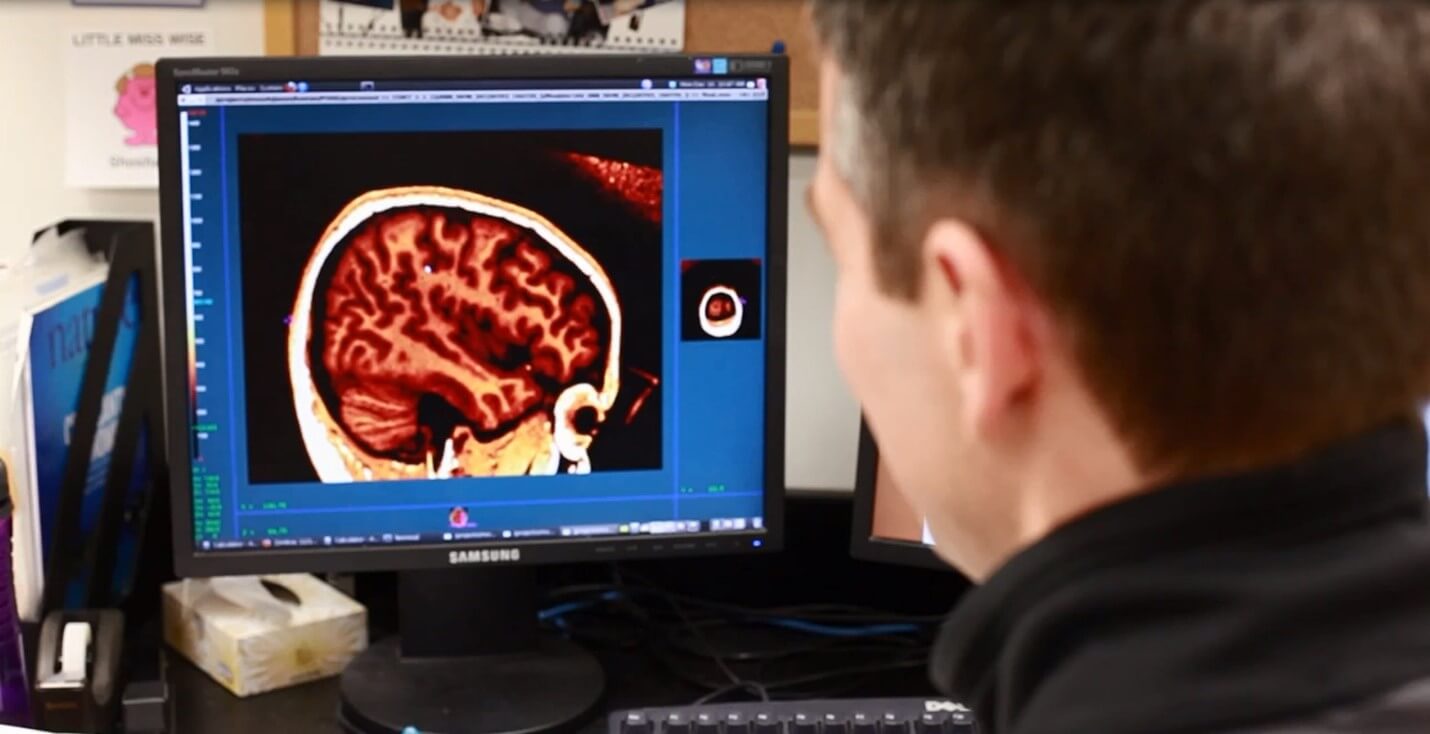
Initially when damage is done to the developing brain that causes Cerebral Palsy (CP), neural pathways that allow for motor, speech, sensation and many other functions may be blocked. Advanced imaging strategies have allowed researchers and clinicians to look at how the brain rewires and learns to use the affected areas again. One example of this rewiring (or “plasticity”) is during constraint induced movement therapy. A goal of this area of research is to use imaging to better understand the brain’s ability to re-wire to ultimately improve therapies for CP.
Using innovative imaging techniques to reveal the brain mechanisms and predictors underlying interventions for CP, we can better understand why current therapies work and help predict who they will work best for.
It has been hypothesized that serial inhibitory, low-frequency Repetitive Transcranial Magnetic Stimulation (rTMS) can produce improvements in motor function of the impaired arm in hemiplegic CP children with stroke. This current study attempts to evaluate whether the type of brain injury impacts on the effectiveness of TMS.
Researchers investigated the neurocognitive profile of numerical and mathematical skills in children with CP. They compared the arithmetic ability and brain activation patterns of children with CP to children without CP. Taken together; this information will increase understanding of the numerical and mathematical skills of youth with CP and the associated brain structure and function.